Actor portrayal.
gradient

With SPRAVATO® in combination with an oral antidepressant, your adult patients with depressive symptoms of
MDSI
may find the efficacy they’ve been seeking

MDSI=depressive symptoms in adults with MDD with acute suicidal ideation or behavior.

Limitations of Use:

  • The effectiveness of SPRAVATO® in preventing suicide or in reducing suicidal ideation or behavior has not been demonstrated. Use of SPRAVATO® does not preclude the need for hospitalization if clinically warranted, even if patients experience improvement after an initial dose of SPRAVATO®.
  • SPRAVATO® is not approved as an anesthetic agent. The safety and effectiveness of SPRAVATO® as an anesthetic agent have not been established.

AD=antidepressant.

MDD=major depressive disorder.

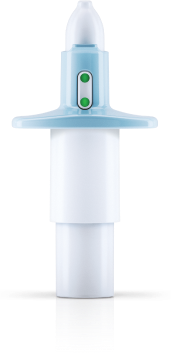
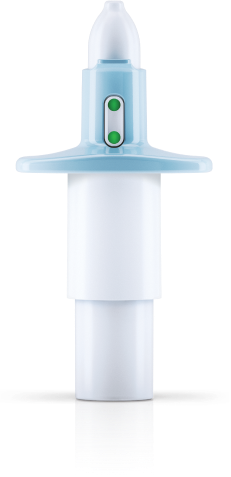
SPRAVATO® (esketamine) Prescription Nasal Spray device
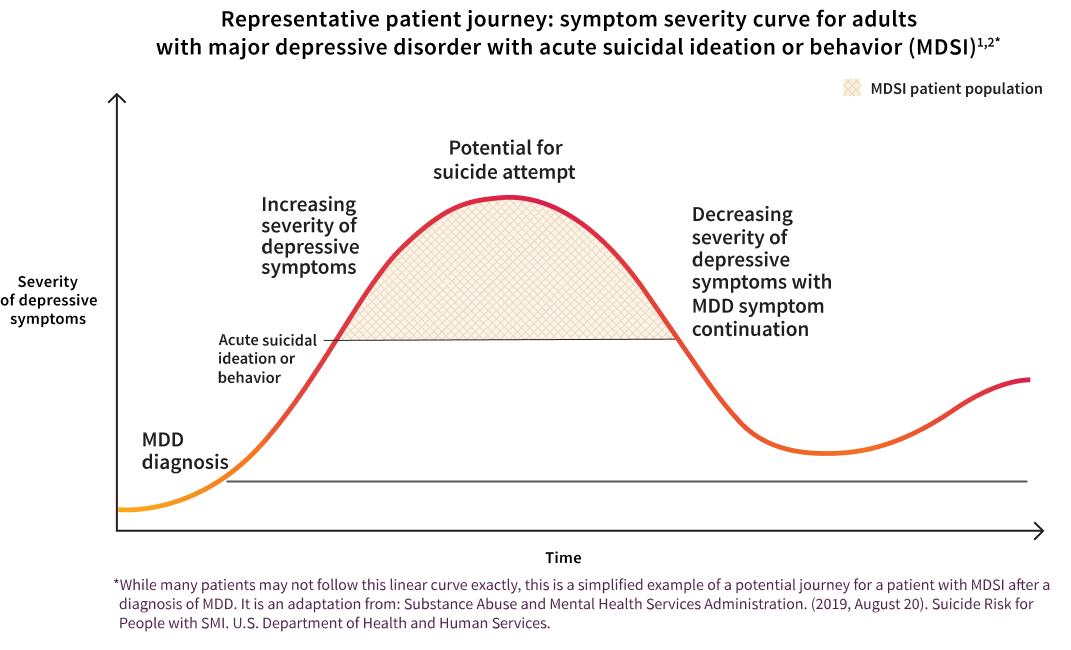
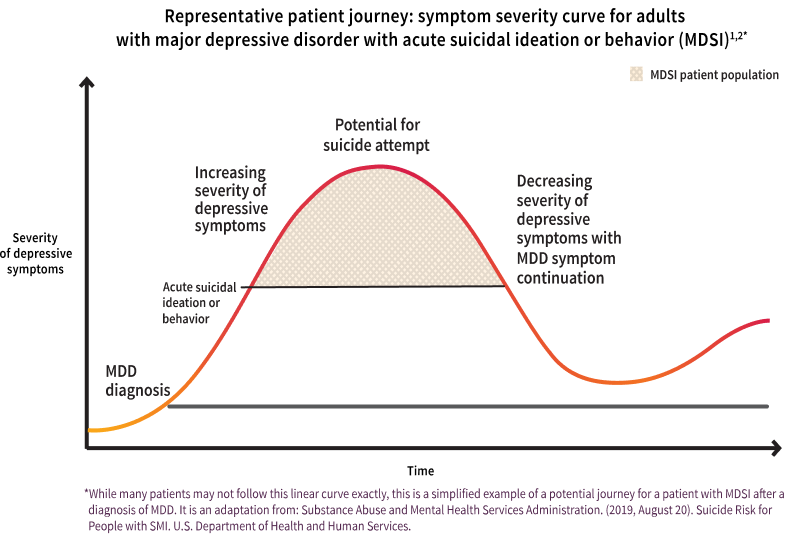
Representative patient journey chart showing severity of depressive symptoms over time
  • For patients with MDD, as depressive symptoms increase in severity, patients may quickly progress to acute suicidal ideation or behavior2
  • These patients may be treated in an outpatient setting if clinically appropriate as an alternative to inpatient care. Patients may be treatment-naïve or already receiving treatment for MDD

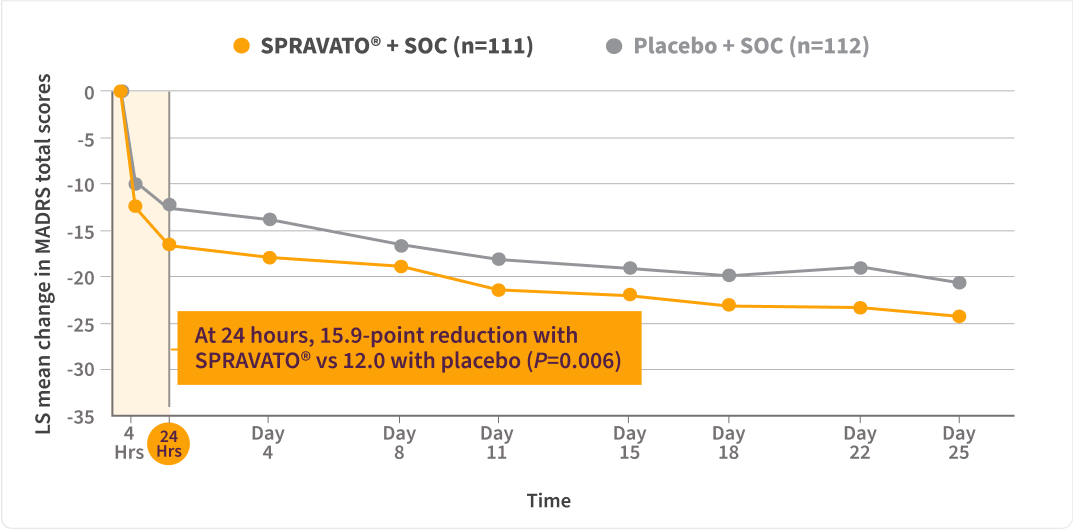
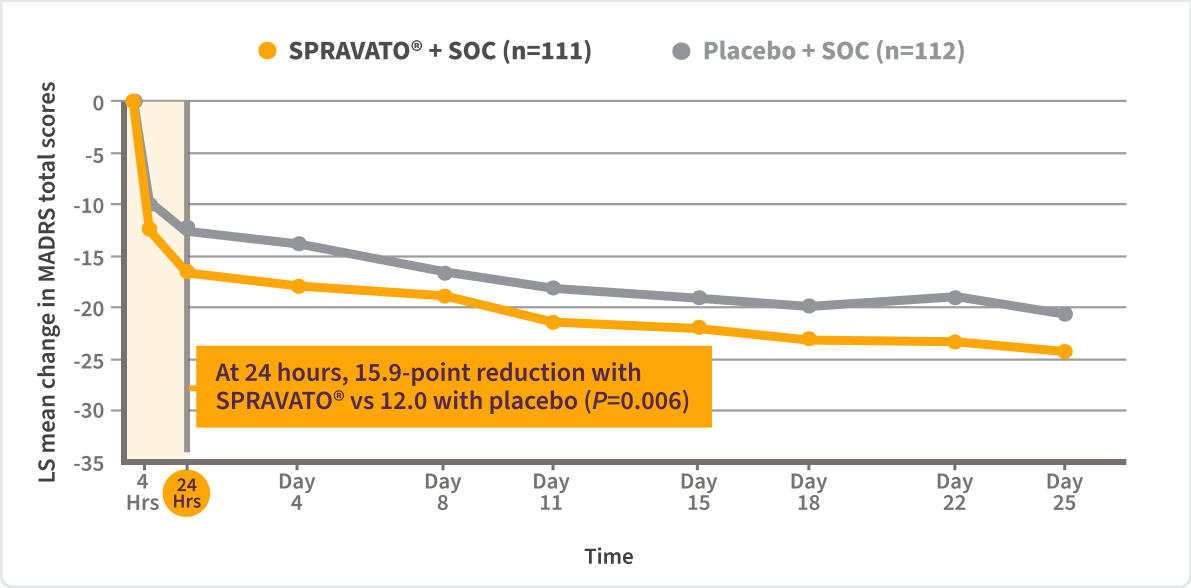
Rapid reduction of depressive symptoms with superior improvement at 24 hours for adults with MDSI compared to placebo plus comprehensive standard of care (SOC)3,4

Comparison chart of SPRAVATO® + SOC versus placebo + SOC over 25 days for adults with MDSI
  • The treatment difference of SPRAVATO® compared to placebo was rapid, appearing as early as 4 hours
  • Between 4 hours and Day 25, both the SPRAVATO® and placebo groups continued to improve; the difference between the groups generally remained but did not appear to increase over time through Day 25

LS=least squares.

MADRS=Montgomery-Åsberg Depression Rating Scale.

SOC=comprehensive standard of care (initial hospitalization and a newly initiated or optimized oral antidepressant).

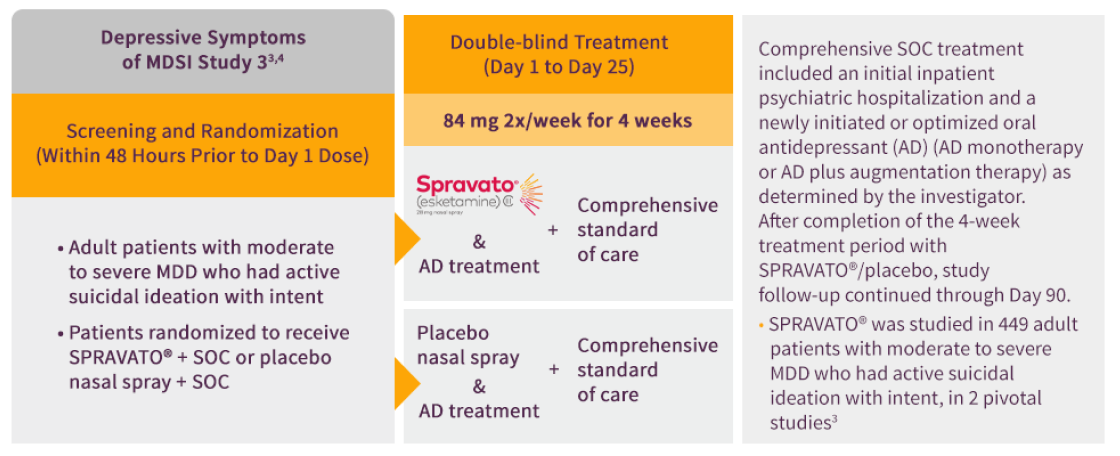
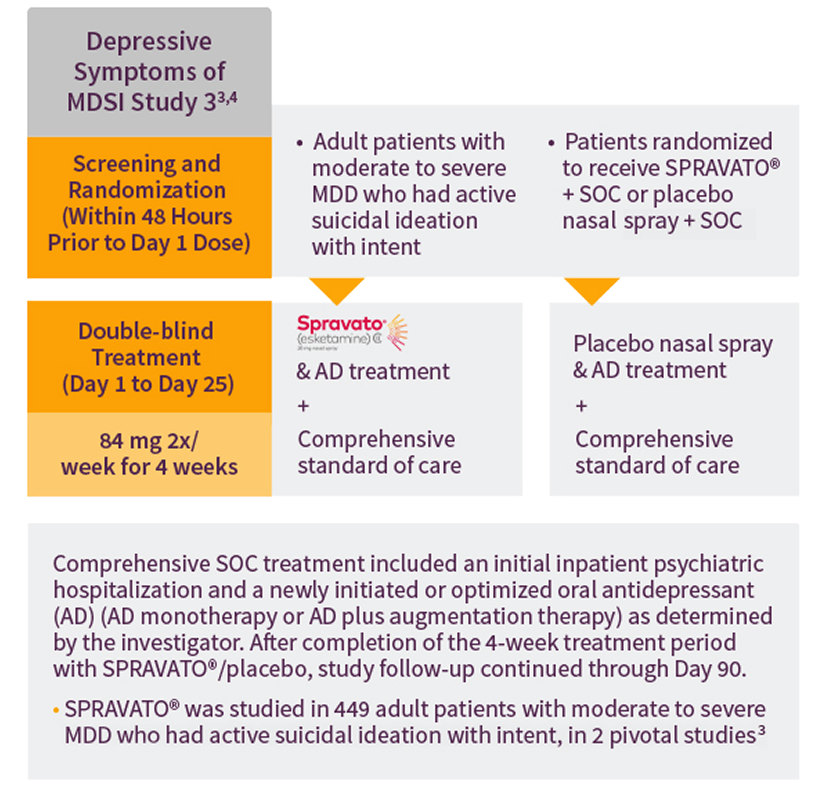
MDSI Study Design3,4

Evaluated in short-term (4-week), randomized, double-blind, multicenter, placebo-controlled studies, Study 3 and Study 4, in adults with moderate to severe MDD (MADRS total score >28) who had active suicidal ideation and intent. Primary endpoint was reduction of severity of depression symptoms of MDD as measured by the change from baseline MADRS total score at 24 hours.3,4

SPRAVATO® MDSI Study 3 design infographic

Primary Endpoint

  • Reduction of severity of depressive symptoms of MDD as measured by the change from baseline MADRS total score at 24 hours after first dose (Day 2)

Dosing

  • Patients received treatment with SPRAVATO® 84 mg or placebo nasal spray twice weekly for 4 weeks
  • After the first dose, a one-time dose reduction to SPRAVATO® 56 mg was allowed for patients unable to tolerate the 84-mg dose

Demographics and Baseline Characteristics

  • Median age 40 years; 61% female; 73% Caucasian; 6% Black

Limitations of Use

  • The effectiveness of SPRAVATO® in preventing suicide or in reducing suicidal ideation or behavior has not been demonstrated. Use of SPRAVATO® does not preclude the need for hospitalization if clinically warranted, even if patients experience improvement after an initial dose of SPRAVATO®
  • SPRAVATO® is not approved as an anesthetic agent. The safety and effectiveness of SPRAVATO® as an anesthetic agent have not been established

MDSI Safety and Tolerability of SPRAVATO®

SPRAVATO® (esketamine) showed overall consistent safety across indications3

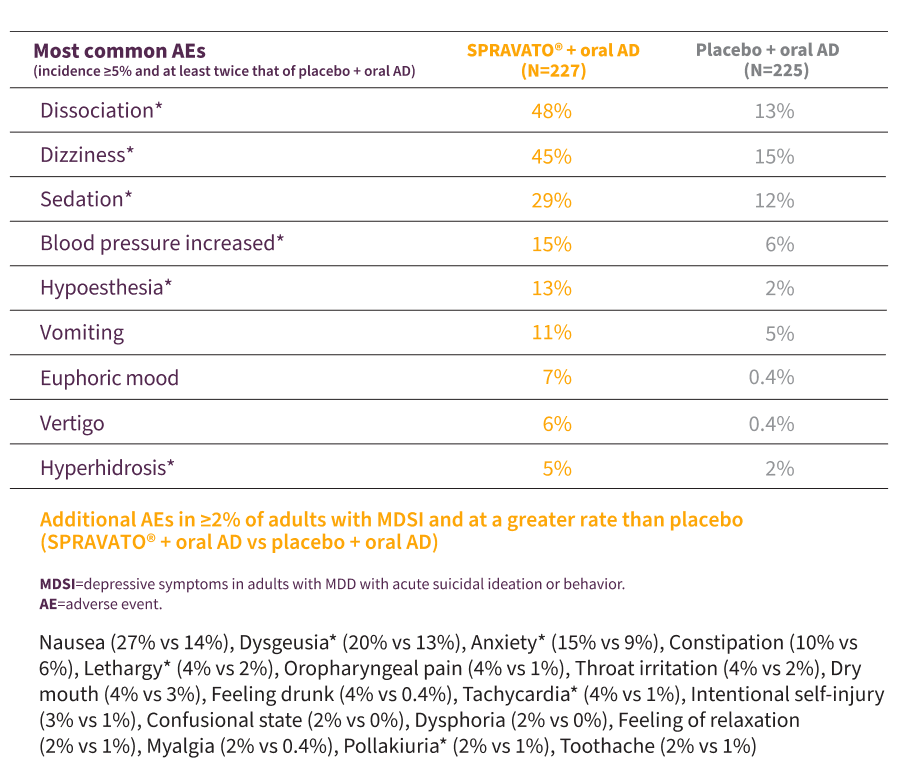
Rates of AEs in MDSI clinical trials

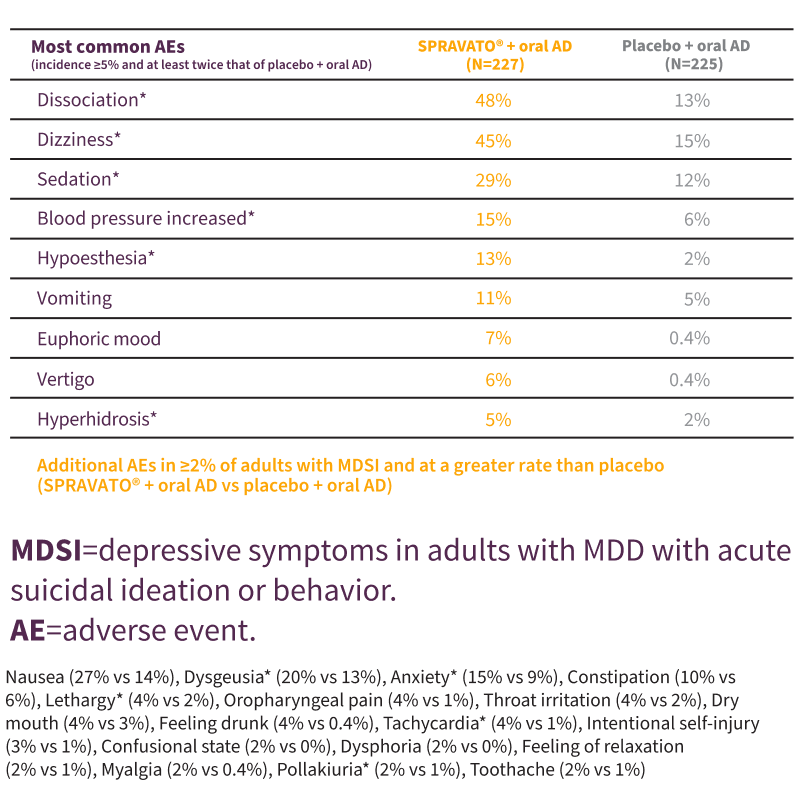
Adverse events chart of SPRAVATO® in MDSI clinical trials

*The following terms were combined:

Dissociation includes: depersonalization/ derealization disorder; derealization; diplopia; dissociation; dysesthesia; feeling cold; feeling hot; hallucination; hallucination, auditory; hallucination, visual; hallucinations, mixed; hyperacusis; paresthesia; paresthesia oral; pharyngeal paresthesia; photophobia; time perception altered; tinnitus; vision blurred

Dizziness includes: dizziness; dizziness exertional; dizziness postural

Sedation includes: sedation; somnolence; stupor

Blood pressure increased includes: blood pressure diastolic increased; blood pressure increased; blood pressure systolic increased; hypertension

Hypoesthesia includes: hypoesthesia; hypoesthesia oral; intranasal hypoesthesia; pharyngeal hypoesthesia

Hyperhidrosis includes: cold sweat; hyperhidrosis

Dysgeusia includes: dysgeusia; hypogeusia

Anxiety includes: agitation; anxiety; anxiety disorder; fear; irritability; nervousness; panic attack; psychomotor hyperactivity; tension

Lethargy includes: fatigue; lethargy; psychomotor retardation

Tachycardia includes: heart rate increased; sinus tachycardia; tachycardia

Pollakiuria includes: micturition urgency; pollakiuria

AD=antidepressant.

Safety Considerations3

Click to expand each SPRAVATO® safety consideration below

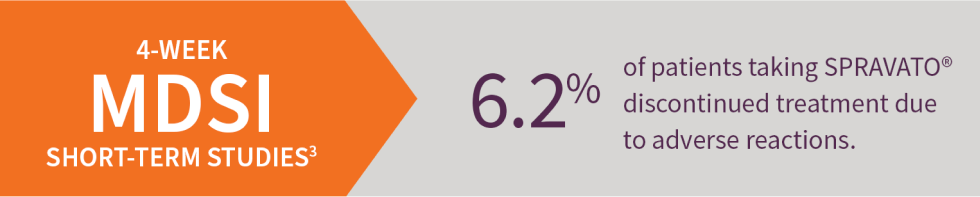
You can have the confidence that SPRAVATO® demonstrated low discontinuation rates:
6.2% of MDSI patients taking SPRAVATO® discontinued treatment due to adverse events infographic

For patients with MDSI, adverse reactions leading to SPRAVATO® discontinuation in >1 patient included dissociation-related events (2.6%), blood pressure increased (0.9%), dizziness-related events (0.9%), nausea (0.9%), and sedation-related events (0.9%).

For additional information, please see full Prescribing Information, including Boxed WARNINGS.

SPRAVATO® is administered at REMS certified treatment centers.

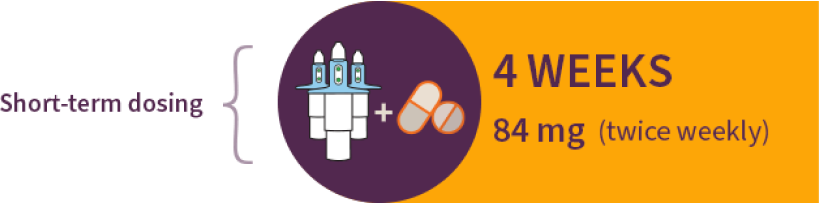
8 doses over 4 weeks to treat depressive symptoms in adults with MDSI3

MDSI=depressive symptoms in adults with MDD with acute suicidal ideation or behavior.

Short-term dosing (4 weeks) infographic

After 4 weeks of treatment with SPRAVATO®, evidence of therapeutic benefit should be evaluated to determine need for continued treatment. Treatment beyond 4 weeks has not been systematically evaluated.

  • SPRAVATO® must be taken with an oral AD
  • SPRAVATO® is self-administered, only under the supervision of a healthcare provider
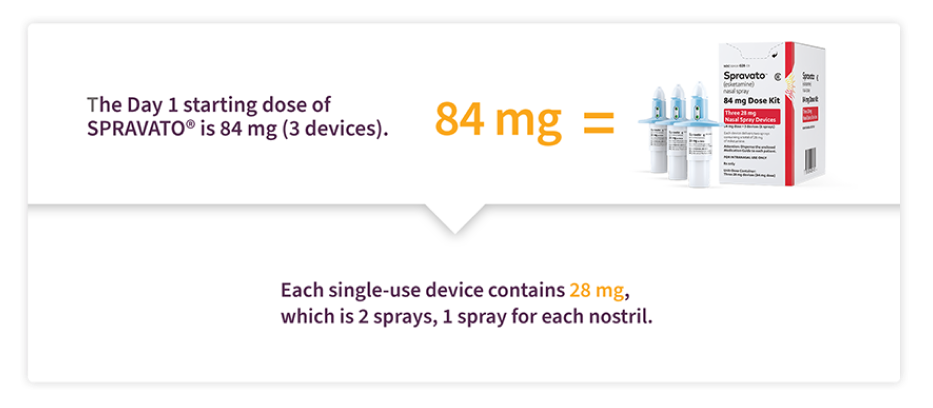
  • The dose of SPRAVATO® for depressive symptoms in adults with MDSI is 84 mg (3 devices) throughout treatment

Dosage may be reduced to 56 mg twice per week based on tolerability.

Administration for treatment of depressive symptoms in adults with MDSI3

SPRAVATO® should be self-administered by the patient under the supervision of a healthcare provider in a certified SPRAVATO® treatment center.

SPRAVATO® Day 1 Administration for MDSI infographic

Please refer to the full Prescribing Information and Instructions for Use included in the SPRAVATO® packaging.

Dosing and administration overview3
Patient sitting in chair icon

Administration

  • Patient-administered under supervision of a healthcare provider (eg, a psychiatrist, nurse, or nurse practitioner)

Monitoring & Discharge

  • Observation by a healthcare provider will be required for at least 2 hours until the provider determines the patient is safe to leave
  • Monitor patients for changes in respiratory status (including pulse oximetry) at each treatment session
  • Blood pressure should be monitored prior to and 40 minutes after administration and subsequently as clinically warranted until values remain consistent at a safe level and the treatment session ends
  • Patients should not drive or operate heavy machinery until the next day, following a restful sleep
    • Patients should coordinate transportation after treatment

Careful consideration is advised prior to treatment of individuals with a history of substance use disorder, including alcohol. Monitoring for signs of abuse and dependence is recommended.

References:

  1. Stanley B, Brown G. The safety planning intervention to reduce suicide risk for people with SMI. SAMHSA (Substance Abuse and Mental Health Services Administration) webinar. Accessed August 15, 2024. https://www.nasmhpd.org/sites/default/files/SAMHSA%20SPI%20SMI%20PPT%20final_2.pdf

  2. Sokero T, Melartin T, Rytsälä H, et al. Prospective study of risk factors for attempted suicide among patients with DSM-IV major depressive disorder.Br J Psychiatry. 2005;186:314-318. doi:10.1192/bjp.186.4.314

  3. SPRAVATO® [Prescribing Information]. Titusville, NJ: Janssen Pharmaceuticals, Inc. July 2020.

  4. Fu DJ, Ionescu DF, Li X, et al. Esketamine nasal spray for rapid reduction of major depressive disorder symptoms in patients who have active suicidal ideation with intent: double-blind, randomized study (ASPIRE I). J Clin Psychiatry. 2020:81(3):19m13191. doi:10.4088/JCP.19m13191.

VIEW FULL IMPORTANT SAFETY INFORMATIONisi-icon